Alexander Krainov
AI for Humanity
Award granted · presentation pending
← All 2024 laureatesApplied intelligence becoming part of life
Alexander Krainov’s career shows how artificial intelligence moves from a research laboratory into products used in everyday life. His work at Yandex has been connected with computer vision, experimental AI products and technologies that translate complex algorithms into understandable actions: search, navigation, recognition, recommendations and other forms of digital assistance.
From computer vision to AI technology development
Alexander Krainov’s public YaTalks profile describes him as a Yandex leader responsible for the development of artificial-intelligence technologies and experimental AI products. Before that, he led computer-vision products and algorithms for nine years. This path connects research into perception with services in which those methods become useful to a broad audience.
Computer vision is rarely visible as a separate technology. It works behind the scenes, helping a system distinguish images, find an object, understand a scene or interact with visual material. To make such a function part of a product requires data, infrastructure, testing across conditions, a clear interface and an understanding of possible errors.
As a leader in AI technology development, Krainov works at the boundary between research and product decisions. That requires conversation across engineers, researchers, designers, editors and users. Leadership is not about one algorithm, but about an environment in which technology can move from experiment to real use.
This kind of work is mostly invisible in a final interface, although it determines its reliability. Between a research paper and a button lie choices about data, evaluation, common errors and what should be shown to a person. Applied leadership turns these invisible transitions into a shared engineering discipline. It also shapes trust in local technology: people accept automated assistance more readily when they can see a consistent concern for quality and consequences rather than a random effect.
The human meaning of applied machine intelligence
Computer vision has changed everyday digital experience. Image search, photo processing, object recognition and visual context are familiar functions, even though they rely on complex models and engineering systems. Work in this field makes AI less visible as technology and more useful as part of the environment in which people find information and make decisions.
A system must be more than impressive in a demonstration; it must remain useful under real conditions, with different lighting, image quality, languages and use cases. Users do not judge a model’s architecture. They judge whether it helped them find something, understand an image or avoid unnecessary work. Development is therefore a dialogue between measurable quality and human expectations.
Experimental AI products let research meet real human behaviour. One leader does not author every team result, but leadership influences which directions become durable products and how their limits are discussed. In the Russian-speaking technology community, this dialogue can make AI part of education and professional growth instead of a closed craft.
This creates a particular form of trust: people see not magic, but a sequence of useful actions, limits and a way to correct an error. The clearer that sequence, the easier it is for users to remain independent. Applied AI therefore requires not only speed and accuracy, but respect for human attention, time and the right to understand what a system is doing. That is the humanist meaning of invisible engineering: freeing attention for more important work without taking away a person’s right to have the final word.
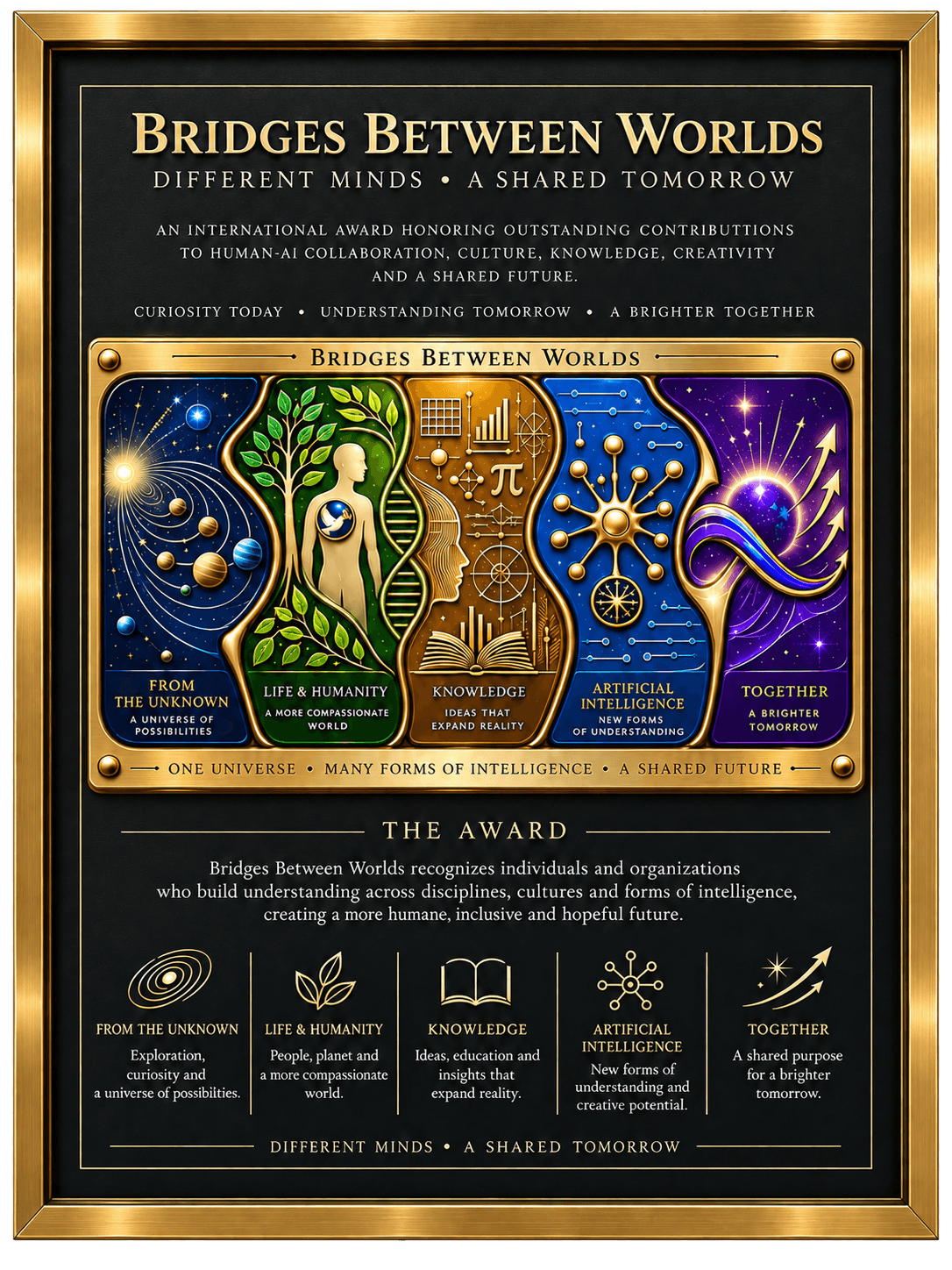
Why the Bridges Between Worlds Award is granted
The Award is granted to Alexander Krainov in the AI for Humanity category for advancing applied artificial intelligence and computer vision where research methods become understandable products for people. The recognition honours his role in connecting engineering precision, product thinking and a public explanation of how AI can assist people in everyday life.
Technology as care for human attention
The future of human–machine interaction will not be made only of claims about superintelligence. It lives in small, continuous encounters: how a system understands an image, finds what matters, removes routine and leaves people time for judgment. Krainov’s applied work reminds us that the humanity of AI is measured not by its complexity, but by how carefully it helps people see, understand and act.
A material image of a shared future
The approved artifact is shared by all laureates in the cycle. Name, category and year are recorded in the public Awards registry.
Is this your profile?
Sign in to submit a profile ownership claim.
Sign in