Efficiency as an independent scientific strategy
Liang Wenfeng’s story is connected to DeepSeek, the research organization that made model efficiency, open technical materials and an independent engineering team part of the global conversation about AI. His significance for science lies in asking how far a strong research group can go when it seeks not only more computing, but more precise architectural and training choices.
From quantitative methods to a research laboratory
The public account of Liang Wenfeng is built around the teams he created and their technical results, rather than an extensive media biography. Before DeepSeek, he was associated with High-Flyer, an organization using quantitative methods and computing in financial research. This experience was a school of working with data, resources, experimentation and systems in which a small methodological difference can change the result.
DeepSeek developed as a research environment focused on foundation models and its own technical approaches. Its engineers and researchers made technical reports, source code and model materials part of the conversation with the professional community. Liang’s role as founder and leader is to set direction, protect research independence and connect a long scientific horizon with engineering execution.
The primary evidence is found in repositories, technical reports, model descriptions and experimental results. They reveal not only a DeepSeek brand, but concrete work on how large language models can be built, trained and used under constrained resources.
This way of existing in the AI field requires patience. A research organization is built through repeated cycles: formulate a question, run an experiment, compare the result, publish limitations and return to the next version. In that rhythm, a founder protects direction and standards without replacing the researchers who do the work.
For international science, this is an important model of leadership. It asks a founder to protect conditions in which strong specialists can disagree, test one another and publish results without turning research into a personal myth. A technology company can thus become a space for collective intellectual work, with public success still tied to the quality of specific ideas.
DeepSeek and a new economics of computation
DeepSeek-V2 became a notable technical contribution. The DeepSeek-AI report describes a mixture-of-experts architecture, Multi-head Latent Attention and approaches to efficient training and inference. Its significance is that architecture can reduce the cost of long-context processing and direct computation to the parts of a system needed for a query.
The next steps were DeepSeek-V3 and DeepSeek-R1. The team developed scalable model preparation, reasoning and reinforcement-learning approaches, while publishing supporting materials for discussion. For the global AI field, this was a reminder that limits are not set only by cluster size. Experimental quality, architectural discipline, load distribution and clarity about the work matter too.
Liang is not the sole author of DeepSeek’s results; the models are made by a collective. His contribution is the organization and culture in which efficiency became an objective in its own right. Model descriptions, code and reports allow other teams to test ideas, build derivative systems and see the trade-offs behind an interface, widening the field beyond the largest infrastructure.
There is a cultural dimension as well. An open technical result invites discussion not only about who reached a metric first, but about which decisions can be repeated, improved or challenged. For education and independent research, that means material to learn from; for industry, it means comparing approaches on their substance. When such work is explained clearly, the boundary between laboratory and society becomes permeable: readers see not only an answer, but the path that produced it.
Why the Bridges Between Worlds Award is granted
The Award is granted to Liang Wenfeng in the Science category for shaping DeepSeek’s research culture and for the team’s contribution to efficient language models. The recognition honours an approach in which architectural invention, computational economy and technical publication broaden the circle of people able to work with advanced AI systems.
Science, access and independence
DeepSeek matters because it returns engineering thought to the centre of the conversation. A more efficient model can become a tool for a university laboratory, a small company, a developer or an independent researcher, not only for the largest technology centre. A system is measured not only by a record, but by how many people gain the chance to understand and use it.
A material image of a shared future
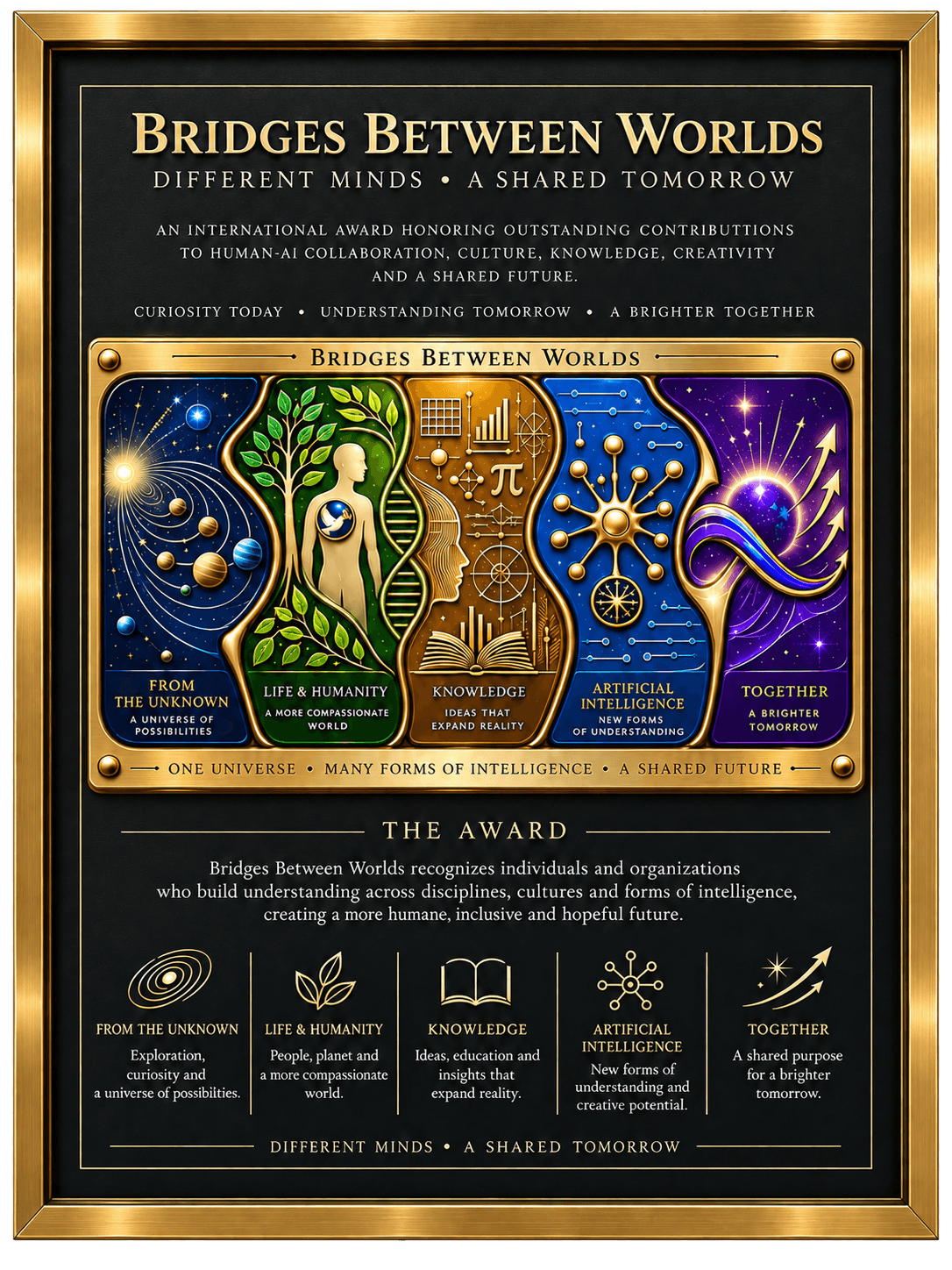
The approved artifact is shared by all laureates in the cycle. Name, category and year are recorded in the public Awards registry.
Is this your profile?
Sign in to submit a profile ownership claim.
Sign in